Corners
Institution
Royal College of Art
Programme
MRes RCA
Year
2024
Location
London, UK
Series
Artificial Gestation Systems
Medium
Mixed media installation, latex sculpture, soft sculpture, sculptural painting
Status
Completed
Platform
RCA Research Biennale
Artificial Wombs — Rethinking the Representation of the Uterus through a Sculptural Painting Practice
This practice-based research project addressed confusion about female identity through sculptural painting and material experiment. It demonstrated the iterated narrative of uterus representation in Western culture until scientific understanding became mainstream through archive-making; and through working with latex sculpture, soft sculpture, and mixed media installation, played with the visual language they inherit to tell an alternative story of a possible future.
As a diaspora artist working between China, Romania, and London, this feminist contemporary art research bridges personal experience with historical context, examining how representations of the female body have been constructed and inherited across centuries of Western medical and artistic tradition.
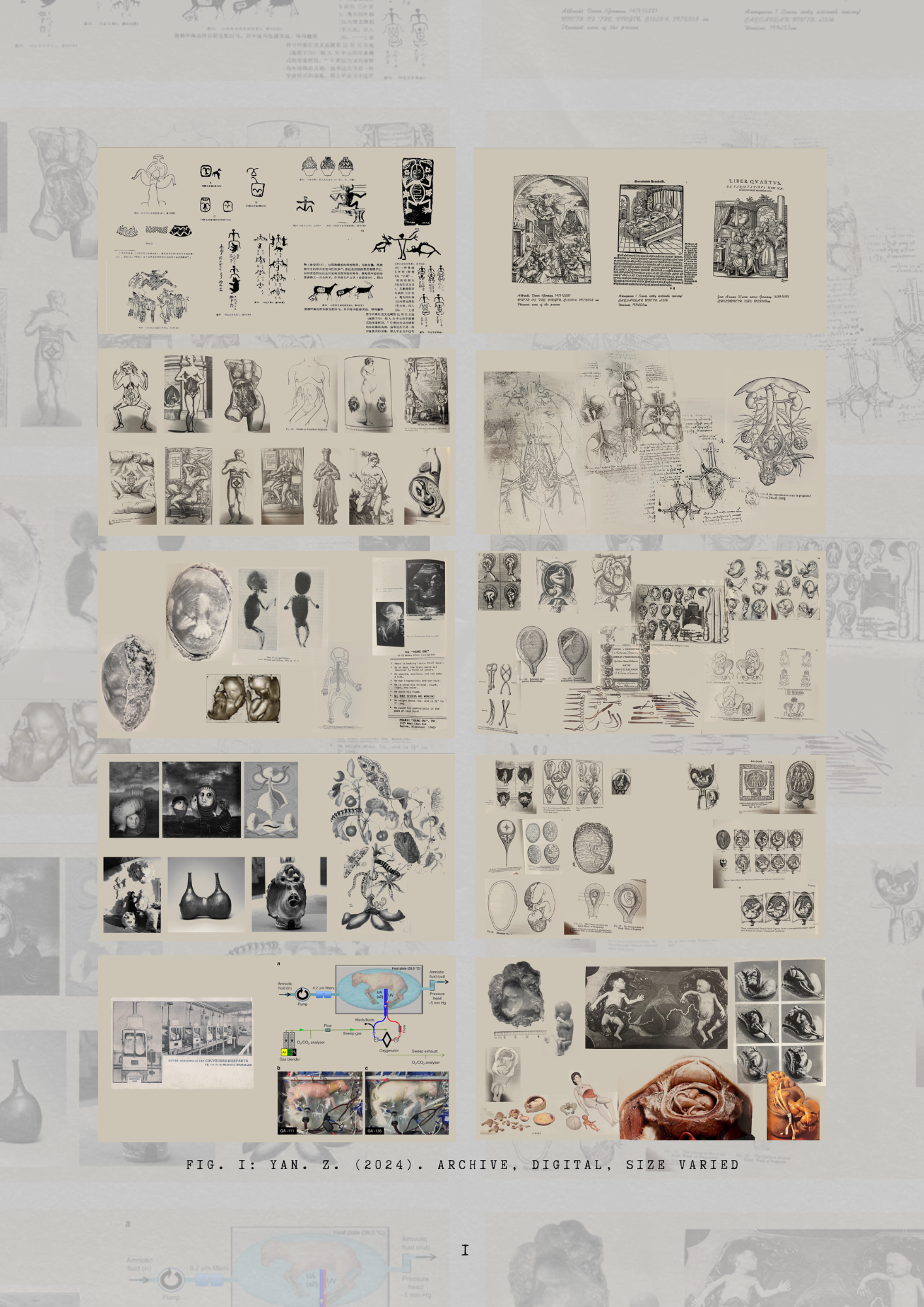
Archive of Representations
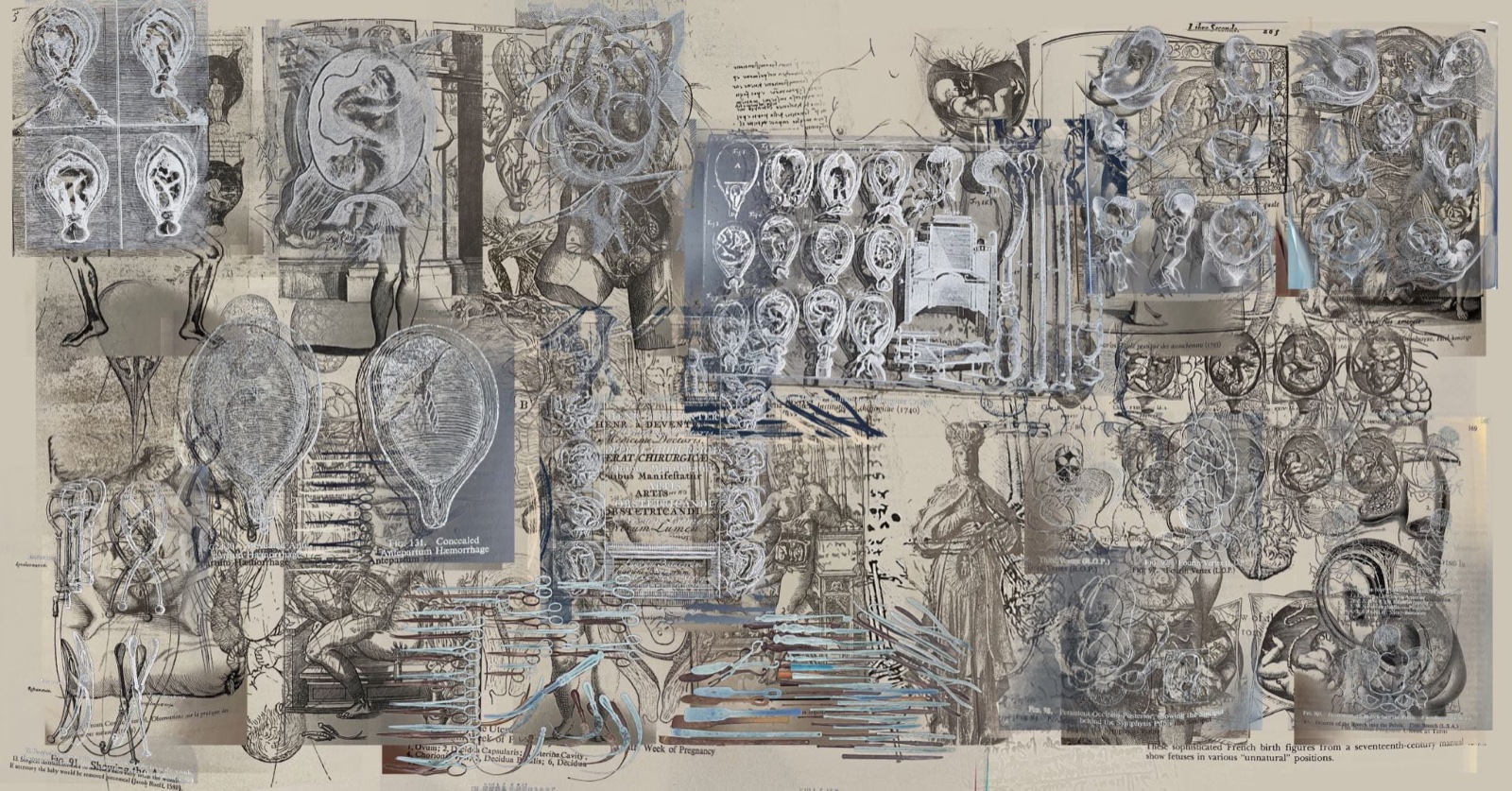
An archive of the representation of the uterus in different times and cultures. This section investigates how the uterus has been depicted across centuries — from ancient anatomical drawings to medieval manuscripts to modern medical imaging — revealing how each era's understanding (and misunderstanding) shaped the cultural narrative around the female body.
Imagery History of the Uterus
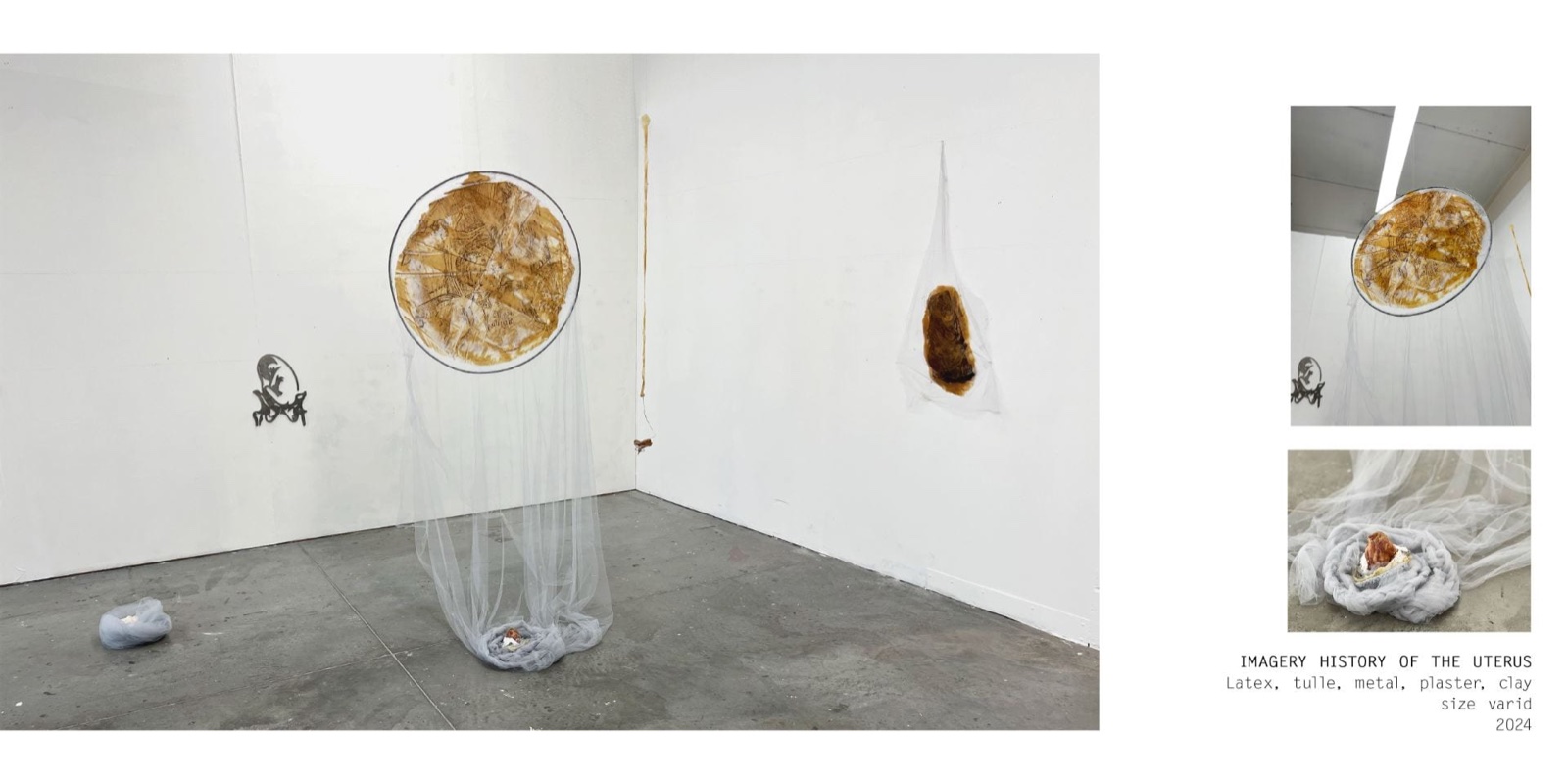
The representation as knowledge, knowledge as power, the river of past representations. This section traces how visual depictions of the uterus evolved alongside — and were often weaponised by — shifts in medical authority, religious doctrine, and political control over the female body.
From Vesalius to modern ultrasound, each new imaging technology reframed public understanding while simultaneously reinforcing or disrupting existing power structures around reproduction and femininity.
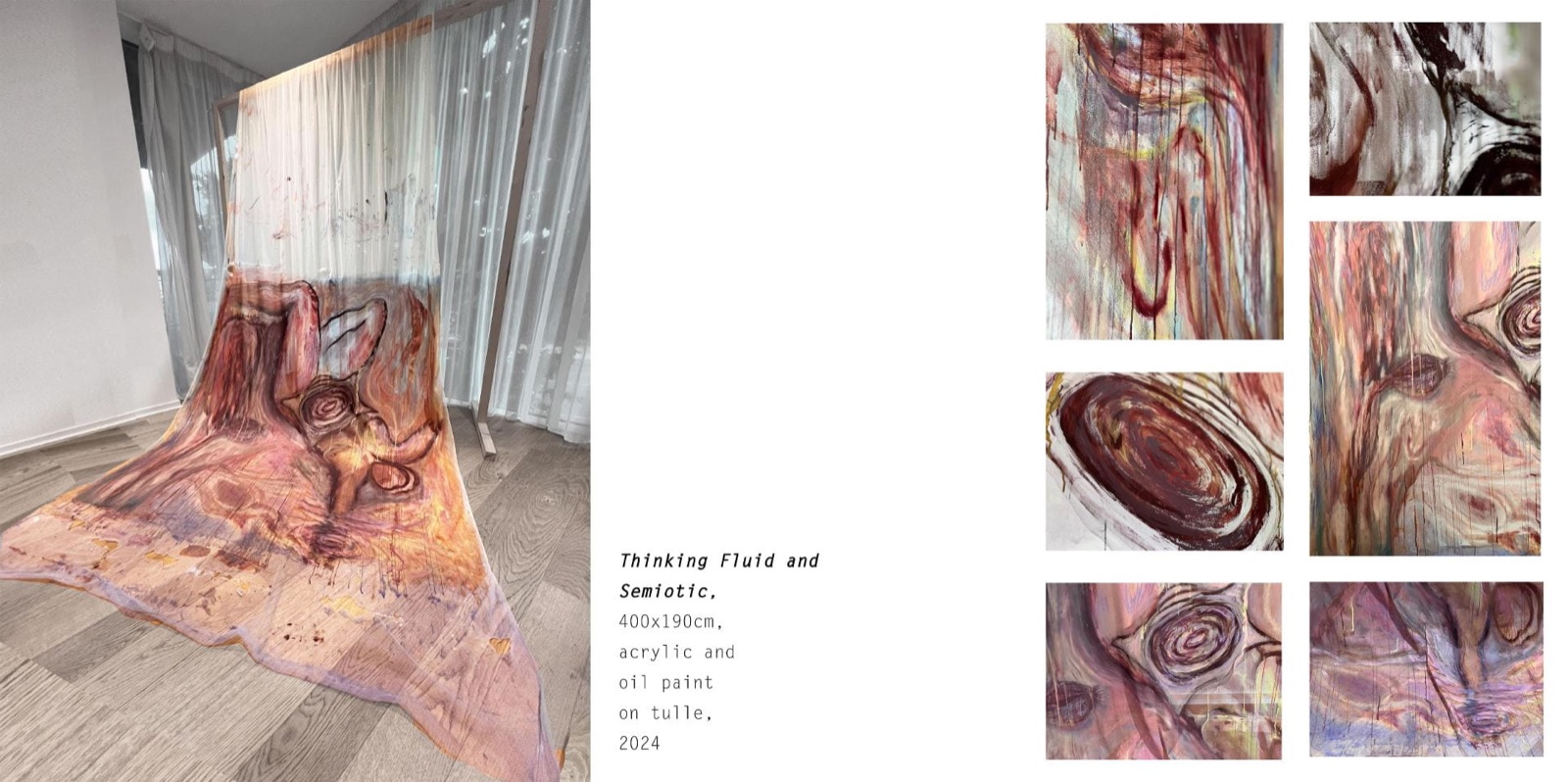
Thinking Fluid and Semiotic
An alternative way of representing the female body through fluidity and material experiment. This section explores how working with latex sculpture, gel, ink, and pigment — the materials of artificial womb art — can bypass the rigid visual language inherited from anatomical illustration and create new, embodied uterus representations that resist categorisation.
Through fluid materials that drip, pool, and set unpredictably, the work embraces the body's resistance to being fixed in a single image or meaning.
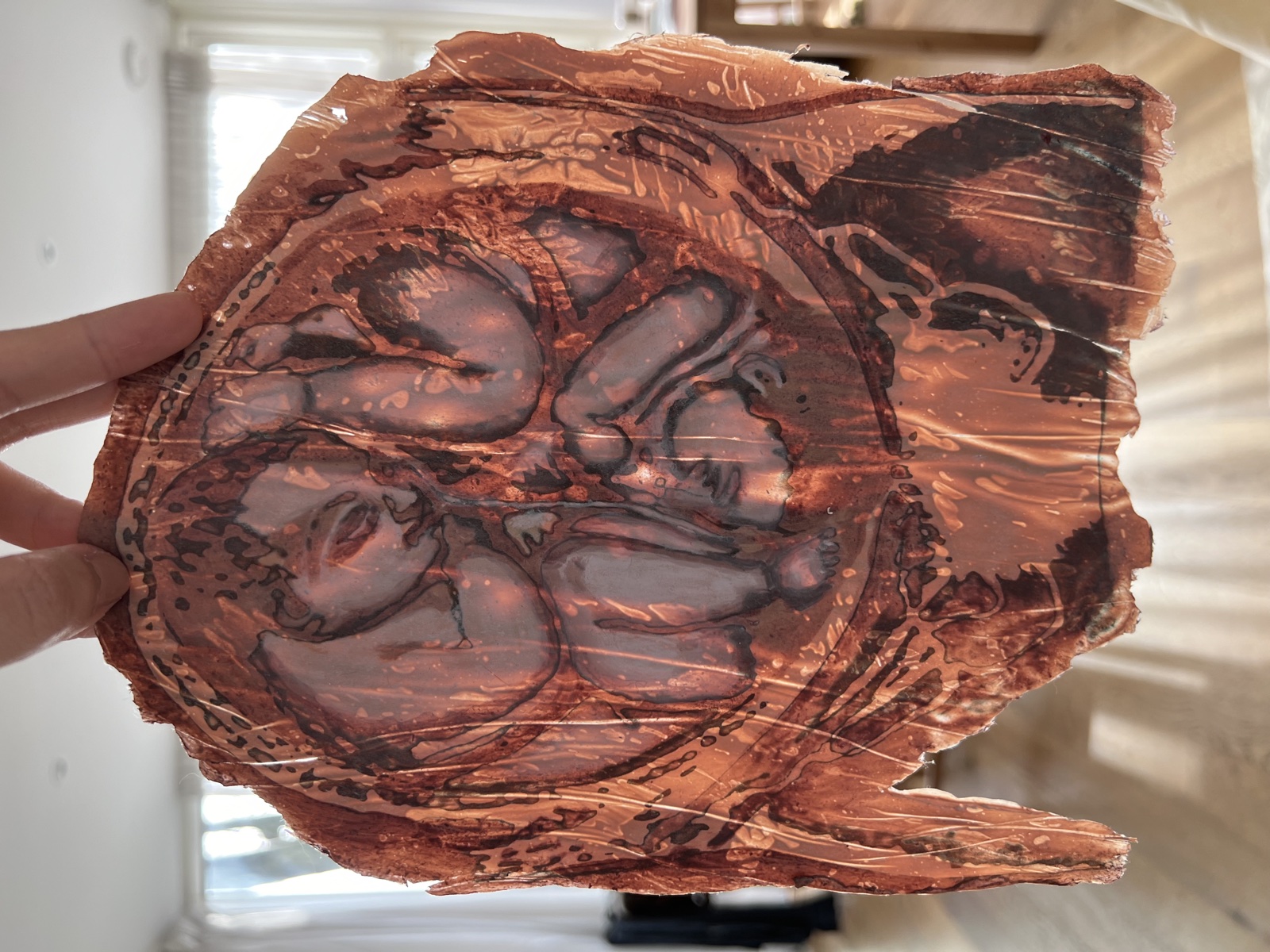
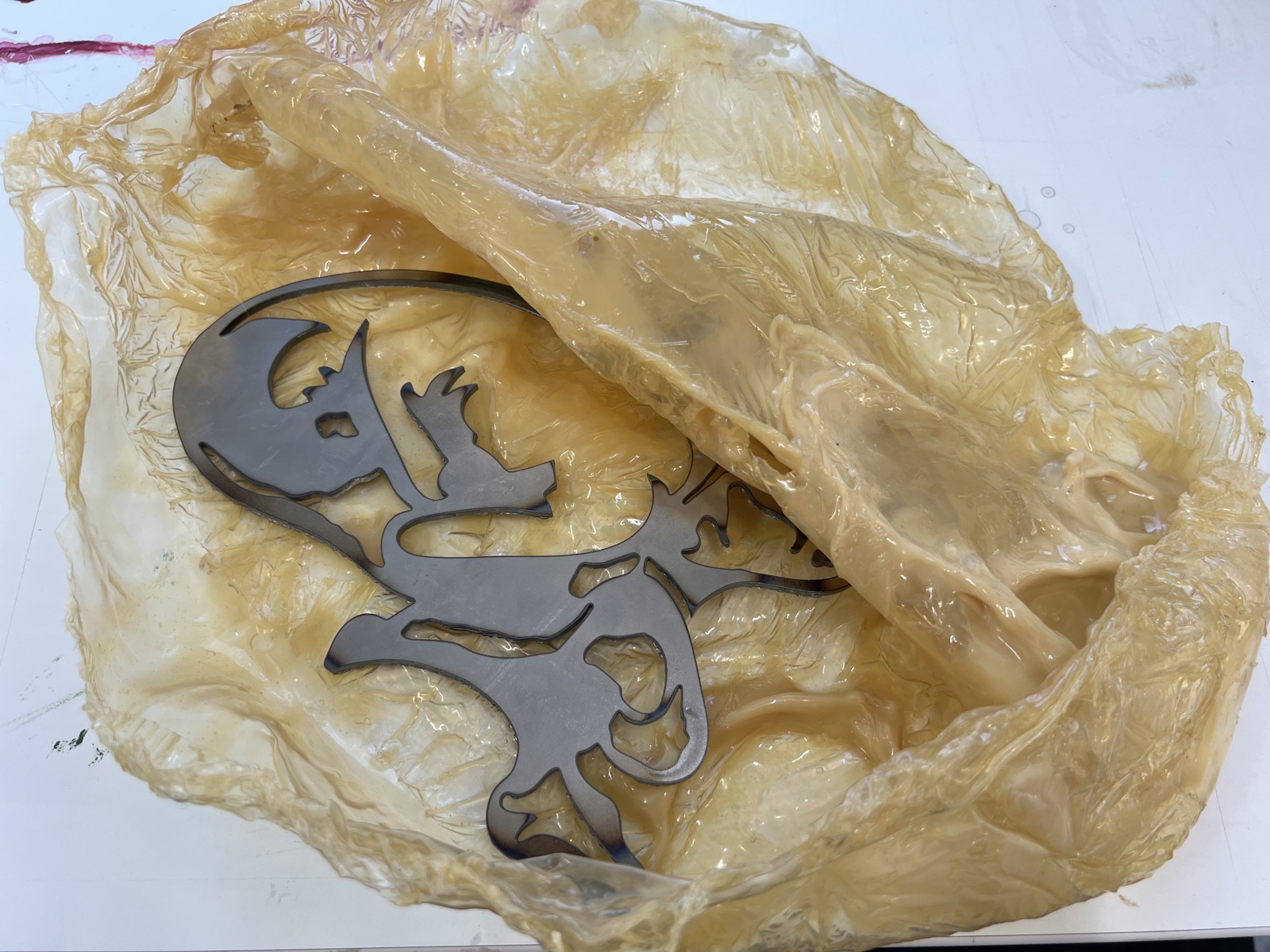
Soft Sculpture
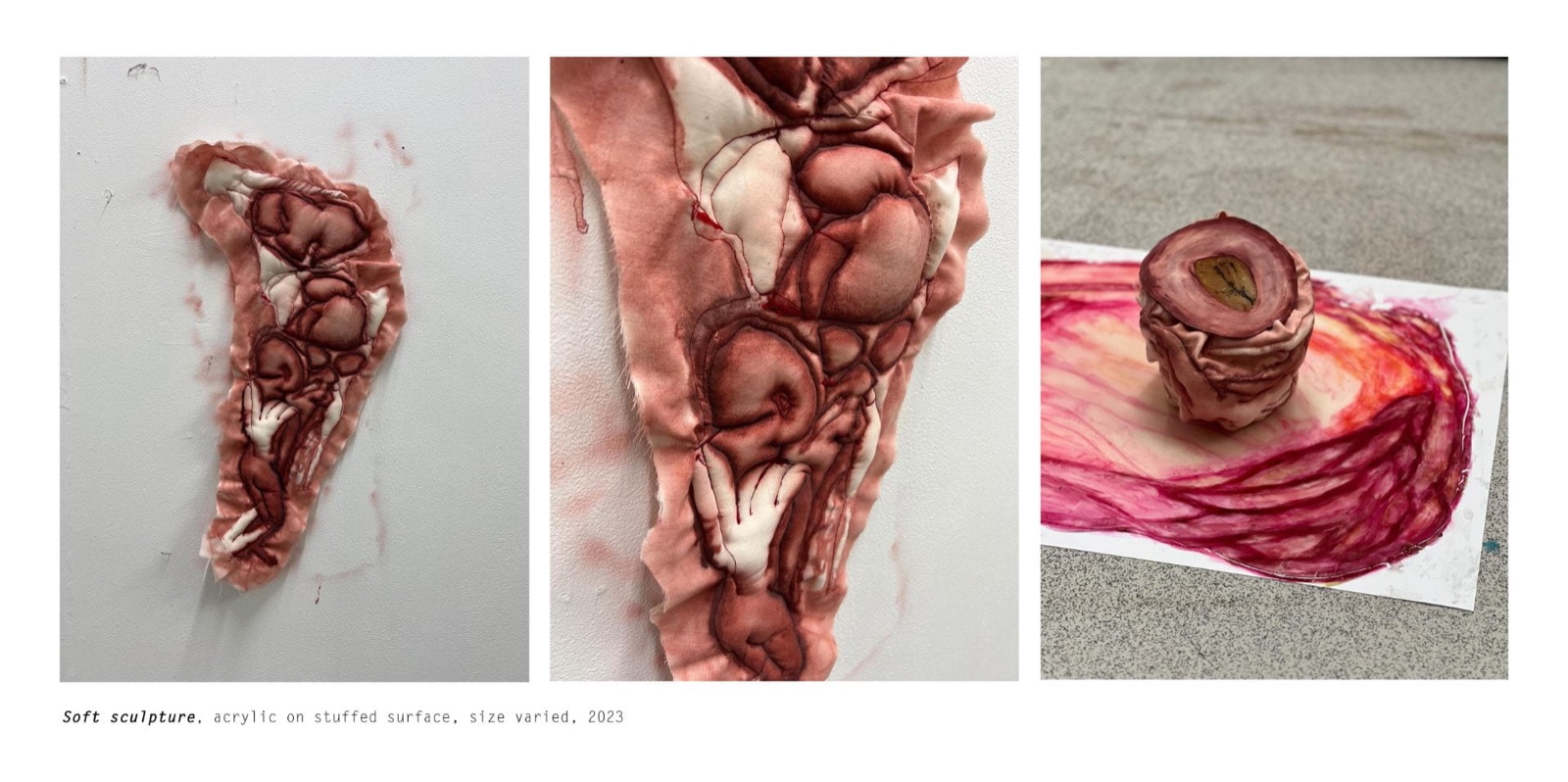
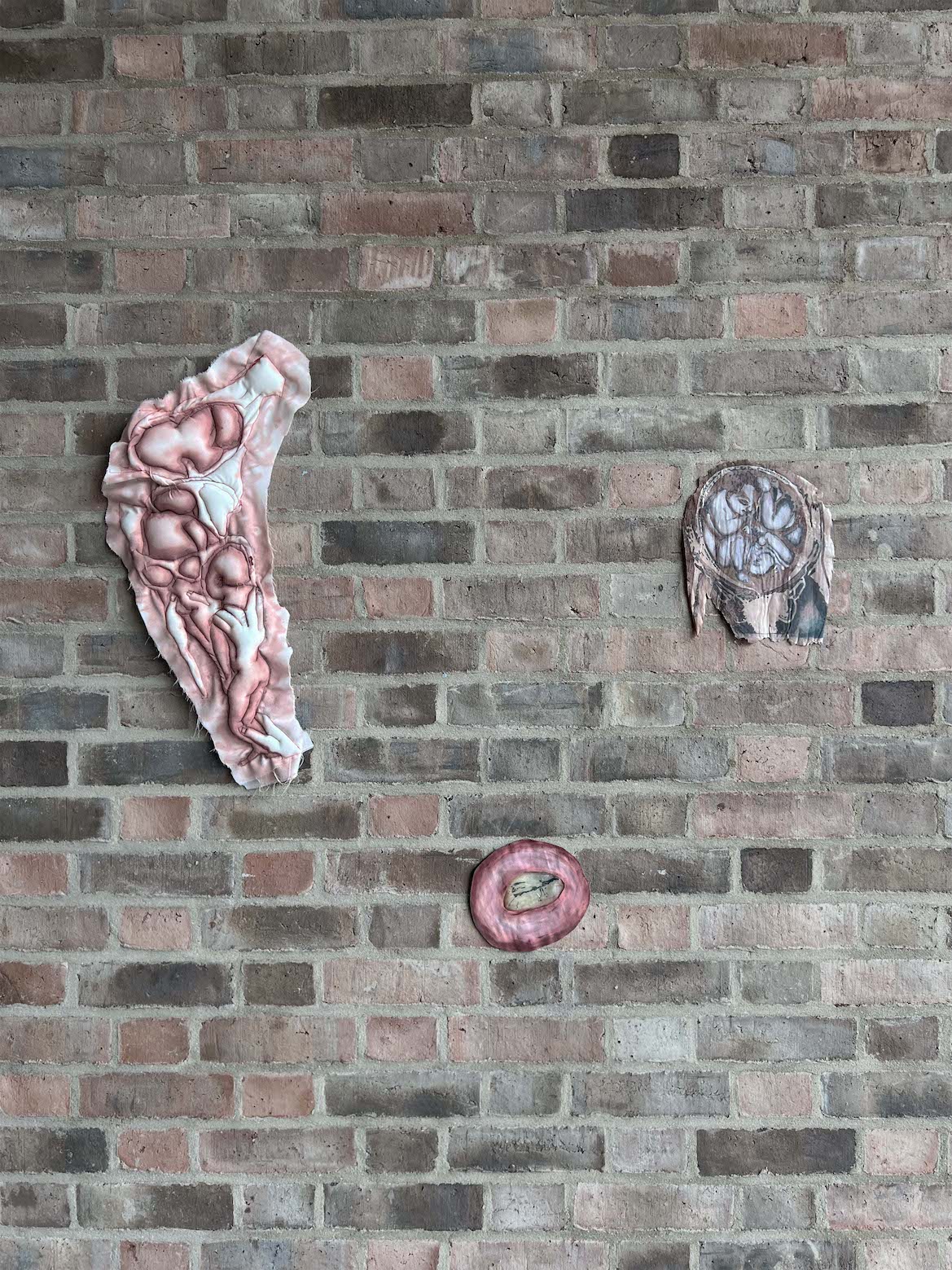
Stitching, painting of medical images of the birth, visceral. These soft sculptures and latex sculptures extend the painted surface into three-dimensional form, using fabric, latex, plaster, and thread to create objects that carry the weight and vulnerability of the female body.
These works blur the boundary between painting and object, between representation and embodiment — each piece holds the tension between clinical precision and raw, corporeal intimacy.